
At Seyu, we believe that great ideas rarely come from looking at things the same way. Our team brings together different backgrounds, experiences and professional perspectives, and that's one of our greatest strengths.
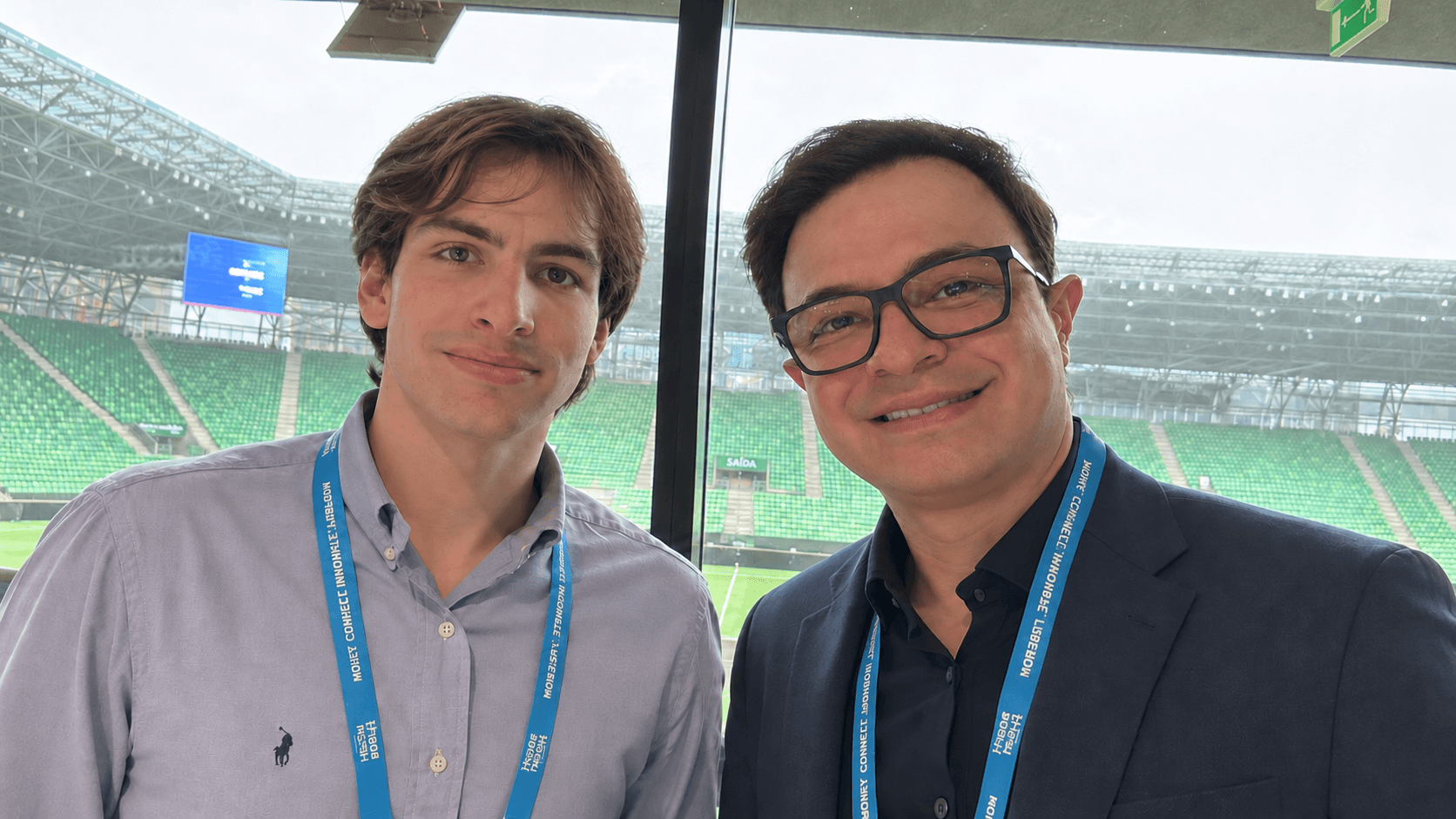
So, we sent two very different perspectives into the room. Ricardo Maia, our Director of Business Development, recently joined Seyu from outside the traditional sports industry, bringing a fresh pair of eyes to the conversations shaping its future. Adam Orosz, our Junior Partner Success Manager, represents a new generation of sports professionals finding their place in an industry full of opportunities and change.
Two different journeys, one shared curiosity: what's next for sport?
Rico - Director of Business Development
Fresh eyes on the sports business
You've attended plenty of business events before joining Seyu. What made Sport Forum Hungary different - in the best possible way? Anything you didn't expect?
Sport Forum Hungary was a refreshing experience, both in terms of learning and networking.
What stood out to me was the combination of strong local initiatives and an impressive international presence. Having speakers such as Shaun Harvey, David Kahn, Stephen Domingo, Iris Cordoba, Sophie Morris and Astrid Thams, just to name a few, brought an international perspective and a wealth of different experiences to the conversations.
What I particularly appreciated was the opportunity to hear different perspectives on the challenges and opportunities shaping the sports industry. It wasn't just about listening to success stories, but understanding the thinking, decisions and people behind them.
I came away with new ideas, valuable connections and, most importantly, a renewed appreciation for how much potential there is in the sports industry.
Was there a particular topic, idea or challenge that kept popping up throughout the event? And do you think the industry is giving it enough attention?
Yes. If there was one recurring theme, it was the importance of community and fan involvement.
David Kahn shared how Paris Basketball evolved from a vision into a cultural phenomenon in the City of Light. In another session, Shaun Harvey explored how a small town like Wrexham gained worldwide recognition through the power of football, and how a club's identity can become a catalyst for investment, growth and revenue generation, not only for the club itself but also for the entire city.
Both examples reinforced something I strongly believe in: community is at the heart of sport.
I think the industry still needs to rethink how it sees its supporters. Fans are not simply consumers, spectators or commercial assets. They are the people who invest their time, money, identity and emotions into making a club what it is. In many ways, they are the first investors and partners in the sporting ecosystem.
The challenge is understanding how to build sustainable business models around that passion without taking supporters for granted. We need to create value with fans, not just extract value from them.
Looking ahead, where do you see the biggest commercial opportunities for the sports industry? What should organisations and brands be paying closer attention to?
I believe the biggest commercial opportunity lies in changing how the industry perceives and treats its fans.
Fans shouldn't be seen simply as consumers or commercial assets. They are partners in the sporting ecosystem. In many ways, they are its first investors. They invest their time, their money, their identity and their emotions. They buy the shirts, fill the stadiums, travel across countries and proudly represent their teams wherever they go.
Yet, I think the industry still has a lot to learn about recognising the value of that contribution and, more importantly, giving something meaningful back.
For organisations and brands, the opportunity is to move beyond traditional sponsorship and transactional relationships. Instead of simply targeting supporters, they should find ways to involve them, give them a voice and make them part of the experience.
Technology, data and creativity can help make this happen, creating more meaningful interactions, stronger communities and new revenue opportunities that benefit everyone involved.
I believe the future belongs to organisations that understand that fans aren't just part of the sports business. Without them, there is no sports business to begin with.
Adam - Junior Partner Success Manager
The next generation's take on the sports industry
If you had to pick three things that made attending Sport Forum Hungary worthwhile, what would they be? What inspired, surprised or intrigued you most?
What stood out to me at SportForum Hungary was how traditional sports organisations are receptive to new technologies. It was also interesting to see how sponsorship is moving beyond logo visibility towards experiences that deliver measurable results. The Olympic discussions showed how major sporting events can bring communities together and inspire younger generations to get involved in sport.
There was plenty of discussion around younger audiences and their expectations. What solutions or ideas did you hear about how the industry can better engage the next generation of fans?
Reaching younger fans starts with making the matchday experience simpler and more enjoyable, from stadium payments to games and rewards. Content matters just as much, as younger audiences want to see the person behind the athlete rather than just the performance on the pitch.
From your perspective as a young sports professional, how are younger generations changing what they expect from sports organisations, clubs and the overall fan experience?
For my generation, supporting a club is as much about culture, community and identity as it is about results. We want to feel closer to the players and actively take part in the experience. But that involvement needs to be simple and instant, because every unnecessary step is another reason for a fan to lose interest.